
Lucasys Blog
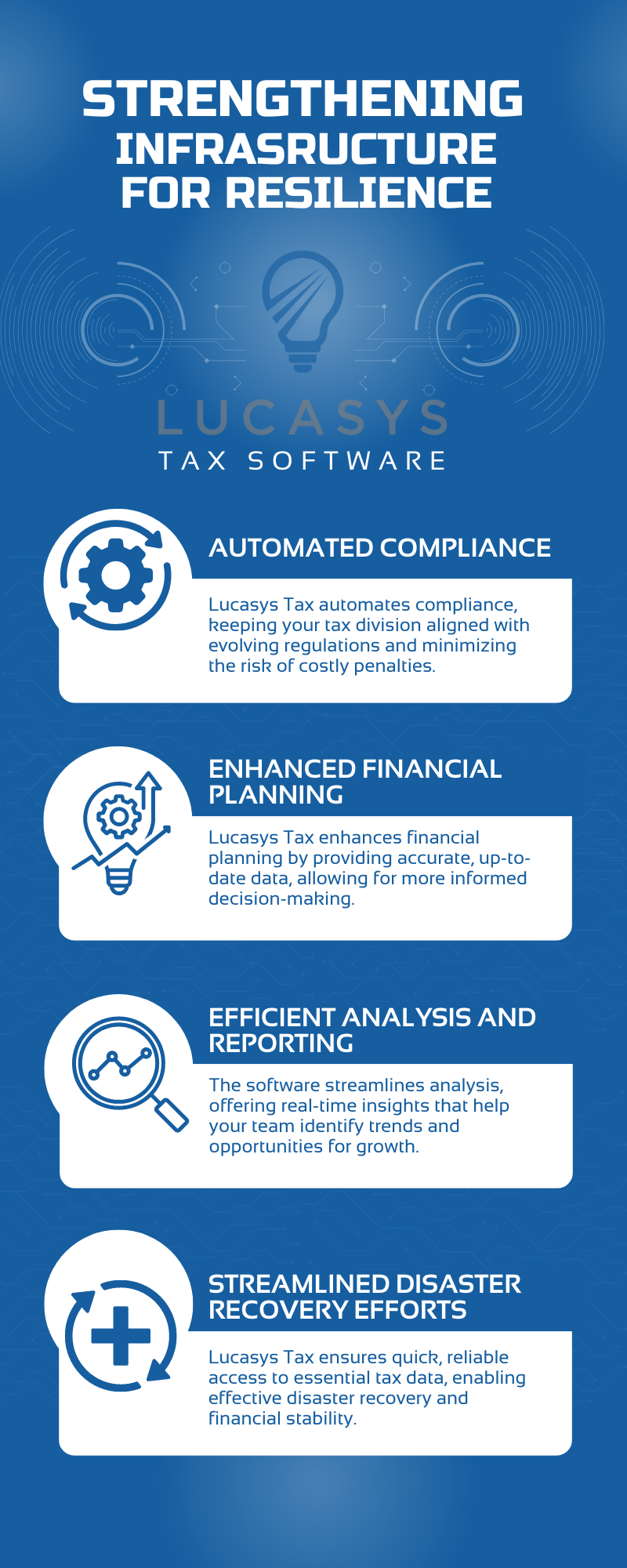
Strengthening Infrastructure for Resilience: The Crucial Role of Tax Software in Investor-Owned Utility Companies
As climate change accelerates, extreme weather events are becoming increasingly common, posing significant challenges to utility companies across the globe. Investor-owned utilities (IOUs), responsible for providing essential services to millions, are at the forefront of efforts to strengthen infrastructure and ensure resilience against these threats. While physical upgrades and operational strategies are crucial, one often-overlooked aspect of this resilience is the role of a utility’s tax division and its technology. Robust tax management is vital in funding, maintaining, and expanding resilient infrastructure.
Corporate Tax Rate Changes on the Horizon… Again! What Utilities Need to Know
As the 2024 election season gains momentum, regulated utilities are facing the prospect of significant policy shifts that could dramatically impact their financial landscapes. Vice President Kamala Harris has recently announced that if elected, she plans to raise the corporate tax rate to 28%. This proposal has raised alarms among tax leaders and CFOs within the utility sector, as the potential changes could lead to substantial adjustments in deferred tax liabilities.

Utilities are Transforming with Cloud Solutions
Cloud computing has applications in a wide array of industries, but utilities in particular are well-suited to reap the massive benefits of the cloud. The unique IT requirements of large, regulated organizations managing critical infrastructure are incredibly complex and notoriously difficult to manage. Only through leveraging the cloud can forward-thinking utilities stay on the cutting edge of technological advancement.

Capitalization of Cloud Computing Costs
Moving data, applications and platforms to the cloud creates substantial business benefits as companies reduce capital expense outlays while maintaining a more flexible IT environment. Though the advantages are numerous, companies pursuing cloud computing solutions need to consider the financial reporting implications as well as broader tax and IT considerations that result from recent guidance on accounting standards effective in 2020 for public business entities.

Utilities closely watching FERC ADIT reporting requirements
Comment letters are in, and the waiting game has begun.
On November 15, 2018, FERC initiated RM19-5, a Notice of Proposed Rulemaking that addresses how electric transmission providers, natural gas utilities, and pipelines must reflect the accounting and reporting of excess deferred income taxes resulting from the Tax Cuts and Jobs Act of 2017. Comment letters were due by January 22, 2019.

Implications of 163(j) for utilities
On Monday, November 26, 2018, the Treasury Department published proposed regulations relating to section 163(j), as amended by the Tax Cuts and Jobs Act. For utilities with regulated operations (excepted trade or business) and non-regulated operations (non-excepted trade or business), the proposed regulations provide additional clarity regarding the applicability of the interest limitation on the consolidated group.