
Lucasys Blog

Preparing for Regulatory Scrutiny: Tax Compliance in the Utility Sector
In today’s rapidly evolving regulatory landscape, investor-owned utilities (IOUs) face increasing pressure to ensure their tax practices are not only compliant but also transparent and defensible. With the growing scrutiny from regulators and the ever-changing tax laws, staying ahead of potential audits is more critical than ever. To navigate these challenges, IOUs must implement robust strategies for tax compliance, leveraging advanced tools and technologies that can simplify the process and mitigate risks.

Simplified Implementation and Effortless Data Conversion
Implementing new software systems is a challenging task for rate-regulated utilities given the scope and complexity of their operations. The importance of seamless implementation and accurate data conversion cannot be overstated. Lucasys Depreciation was designed to address the unique challenges faced by rate-regulated utilities and provides an effortless implementation process.

Lucasys Depreciation Simplifies Fixed Assets with User-Friendly Controls
Depreciation tracking can be a challenging task for rate-regulated utilities that have to comply with strict accounting standards, so Lucasys Depreciation was specifically designed to make the process more intuitive and user-friendly. One of the key benefits of Lucasys Depreciation is its incredible ease of use. New members of a team can immediately access advanced tools without the need for extensive training, allowing accounting and tax departments to quickly adapt to changes in resource planning. Whether you’re a seasoned accountant or tax professional, or someone just starting out in the field, Lucasys Depreciation can simplify the process of tracking depreciation and make your work more efficient.

Lucasys Depreciation Simplifies Fixed Asset Tracking for Utilities
Lucasys Depreciation was designed to streamline depreciation for utilities, with advanced reporting and dashboard functionality that make it easier for financial and tax teams to stay compliant while saving time and effort. Calculating and tracking fixed asset depreciation can be a complicated and time-consuming process, especially for rate-regulated utilities. Large quantities of assets and strict accounting regulations add complexity to what should be a straight-forward process. Whether you're a finance professional, tax professional, or someone interested in learning more about how technology can simplify complex financial processes, Lucasys Depreciation has the answers.

IRS Issues New Safe Harbor Rules for Natural Gas Repairs: What Rate-Regulated Utilities Need to Know
The IRS has issued a new revenue procedure, Rev. Proc. 2023-15, providing a safe harbor method of accounting for natural gas transmission and distribution property repairs, maintenance, replacements, and improvements. This new method allows taxpayers to classify these costs as either capital or deductible expenditures, providing clear and bright-line rules to reduce the burden of compliance.

Lucasys Deferred Tax Empowers Utilities with Dynamic Excess Reversal Controls
Lucasys Deferred Tax has modernized the management of deferred tax reversals by building a suite of intuitive and dynamic controls to streamline their management. Deferred tax balances and associated excess is tracked at a granular level to allow for complete calculation transparency, allowing for new insights into the accumulation and reversal of deferred balances.

Maximizing Your Returns: Lucasys Deferred Tax Helps You Navigate Excess Deferred Income Taxes
Introducing Lucasys Deferred Tax: a first-of-its kind software designed for rate-regulated utilities that provides comprehensive tracking of excess deferred taxes. This innovative software solution enables utilities to track complex tax and regulatory accounting requirements with ease, ensuring compliance with regulatory requirements and accurate reporting of tax balances.

Unmatched Reliability: Lucasys Sets the Standard for Industry Expertise and Technical Support
Lucasys provides peerless expertise in managing deferred tax assets for rate-regulated utilities and works closely with its customers to incorporate their feedback into product development.

Proposal to Increase the Corporate Tax Rate... Again!
In late March 2023, President Biden proposed a federal budget for fiscal year 2024 that will increase government spending in new infrastructure, education, healthcare, and climate change initiatives. To fund the investments, the Biden administration has proposed several tax reforms that will have important implications for corporations. Specifically, the proposed increase in the corporate income tax rate from 21% to 28% will have a significant impact on rate-regulated utilities

IRS Rules Salvage is Protected, Cost of Removal is Not
On October 15, the IRS issued PLR 202141001 for regulated electric utilities. In its ruling, the IRS reiterated earlier assertions that the net deferred tax asset (DTA) related to the cost of removal (COR) is not subject to normalization, but also added clarification that the deferred tax liability (DTL) and DTA from the salvage value is subject to normalization rules.

Details Emerge on Democrats’ Corporate Tax Rate Increase Proposals
Specifics for the “Build Back Better“ (BBB) reconciliation legislation have finally begun to emerge amid contentious intra-party debates within the Democratic caucus. The massive bill encompasses large portions of the Biden domestic political agenda, and debate is ongoing in Congress on the final scope of the bill and how its initiatives will be paid for.
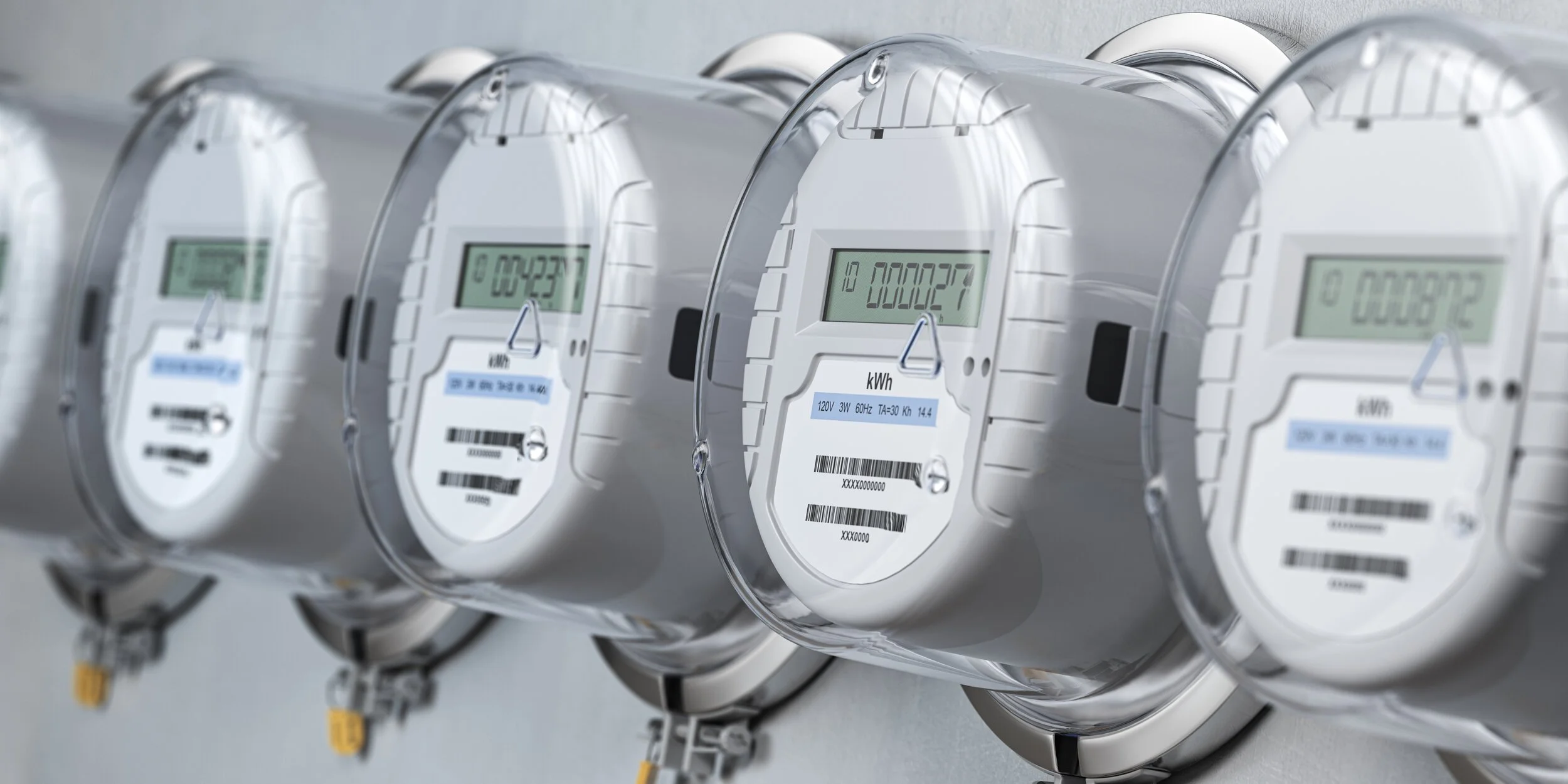
Smart Meter Market Trends
Smart meters are an important technology for the modern electric power industry and are revolutionizing the way customers interface with energy grids. By enabling rapid two-way communications between electric companies and their customers, smart meters provide new and expanded services and enhance energy grid resiliency and operations.

Digital Technologies Propel Utilities to Transform Workforce
Utilities are bracing for a digital revolution, though according to a recent report most executives in the sector agree that their businesses are not prepared for it.
In the Digital Transformation and the Workforce Survey commissioned by EY Power & Utilities, nearly 90% of executives report having too few digitally savvy workers is frustrating their ability to adopt digital technologies. Not only is the problem of an insufficient workforce staring them in the face, by most of the respondents surveyed are lacking a plan on how to proceed. With near-universal agreement (94%) on the need for direct investment in technology and the workforce, utilities are soon to be left scrambling for solutions. The transformation of the power industry will be based on technology, but it will be driven by people.
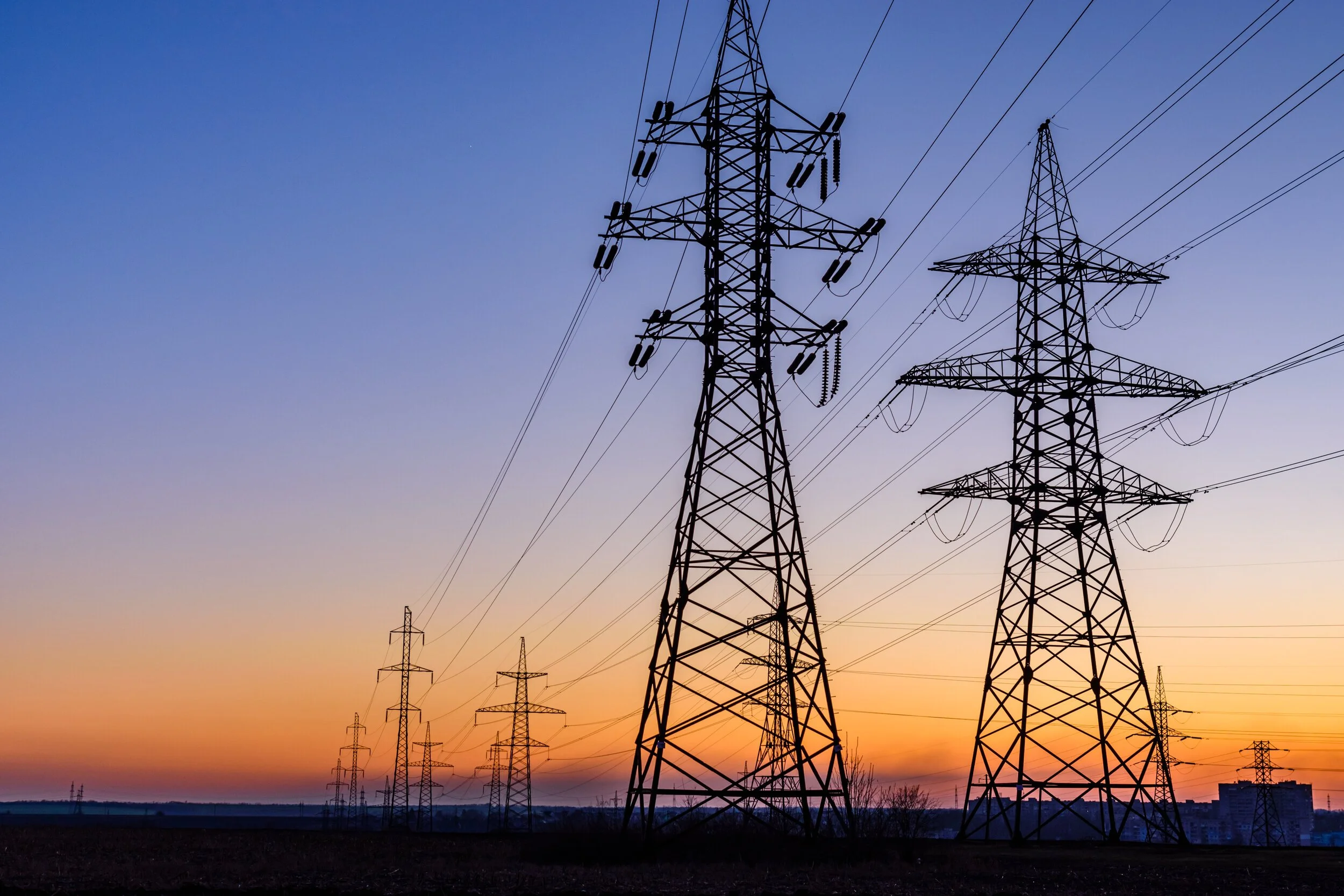
Texas Power Grid Resiliency
In February, a massive winter storm led to a power outage in Texas that left more than 4.3 million households, around one third of the state’s electricity customers, without power for several days amid freezing weather. Over 46 gigawatts of power capacity went offline under the extreme cold weather event, resulting in broad-based failure of the power grid. The energy outages also affected the state’s water services, either making tap water unsuitable for drinking or stopping the supply altogether.

Solar Generation as Public Utility Property
The Internal Revenue Service (IRS) has issued several private letter rulings (PLR) in recent months clarifying the relationship between solar power generation equipment and public utility companies. The main focus is defining whether or not generation equipment with energy pricing based on monthly fees can be treated as public utility property. The designation of generation equipment as public utility property has several important implications, all of which impact how utilities treat the property for tax purposes.

Cost of Removal, Normalization, and Other Thorny Issues for Utilities
On August 14, 2020, the Internal Revenue Service (IRS) issued PLR 202033002 to address outstanding ruling requests on the application of the Section 168 normalization rules to cost of removal (COR). The IRS concluded that the net deferred tax liability (DTL) created by COR is not protected by the normalization rules but did not provide guidance on the actual implementation of the ruling’s conclusions.
Capitalization of Cloud Computing Costs
Moving data, applications and platforms to the cloud creates substantial business benefits as companies reduce capital expense outlays while maintaining a more flexible IT environment. Though the advantages are numerous, companies pursuing cloud computing solutions need to consider the financial reporting implications as well as broader tax and IT considerations that result from recent guidance on accounting standards effective in 2020 for public business entities.

Lucasys Sponsors EEI 2019 Financial Review
Lucasys is proud to partner with the Edison Electric Institute in sponsorship of the 2019 Financial Review, the organization’s annual report of the U.S. investor-owned electric utility industry.

Utilities face uncertainty on tax normalization
On May 7, 2019, the IRS released Notice 2019-33 which formally announced the agency’s intent to issue additional guidance regarding the normalization requirements of excess deferred income taxes which resulted from the decrease in the corporate income tax rate.

Utilities closely watching FERC ADIT reporting requirements
Comment letters are in, and the waiting game has begun.
On November 15, 2018, FERC initiated RM19-5, a Notice of Proposed Rulemaking that addresses how electric transmission providers, natural gas utilities, and pipelines must reflect the accounting and reporting of excess deferred income taxes resulting from the Tax Cuts and Jobs Act of 2017. Comment letters were due by January 22, 2019.